Pictures & sound

The cassette
tape

Recording from the radio, making a mixtape and rescuing a jammed tape with a pencil. The compact cassette made listening personal, with an invention that had strong Dutch roots.

Read the story
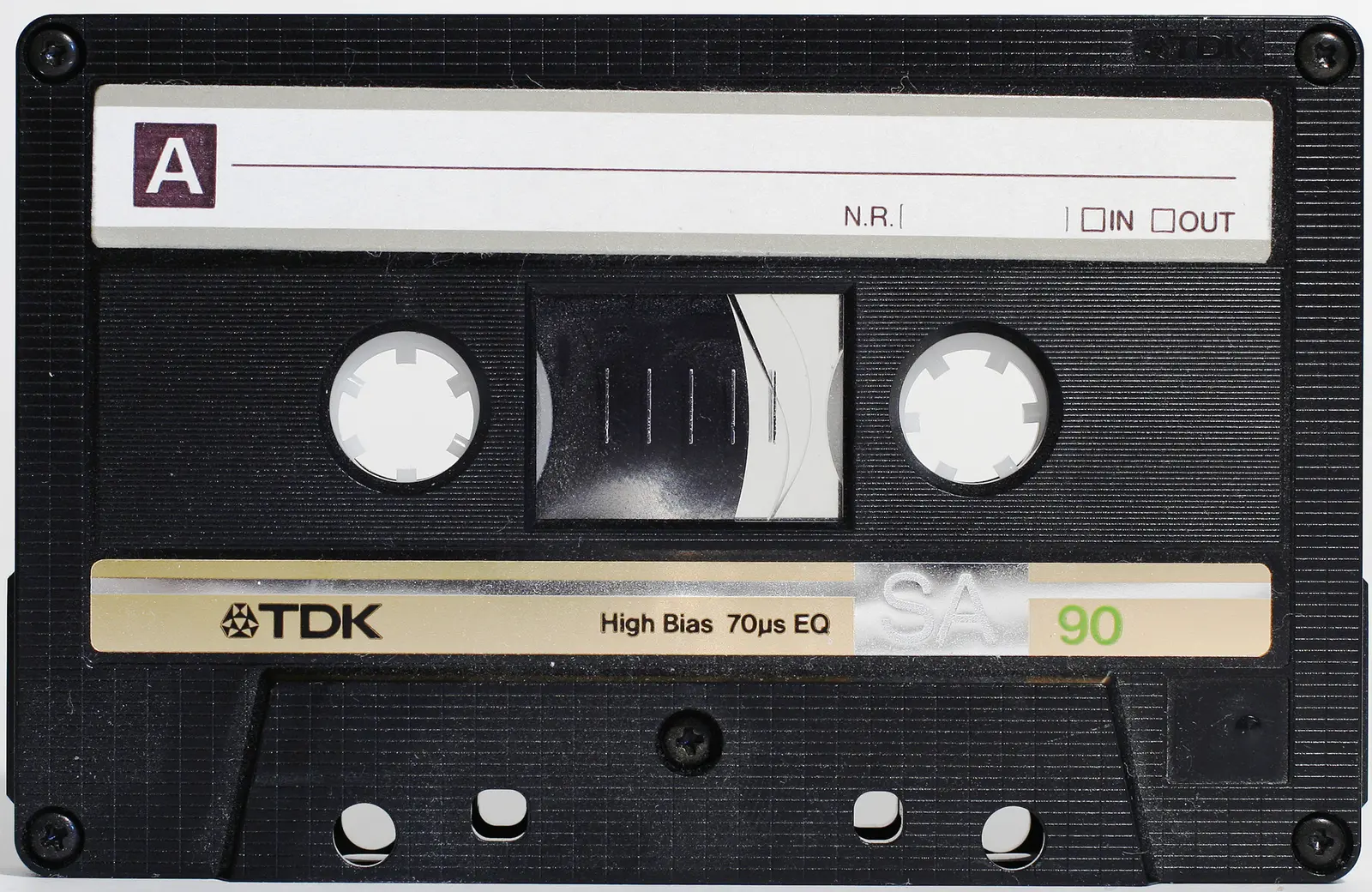
A TDK compact cassette with visible magnetic tape
Compact cassette — Thegreenj · CC BY-SA 3.0 · cropped and reduced.

Small enough for a coat pocket

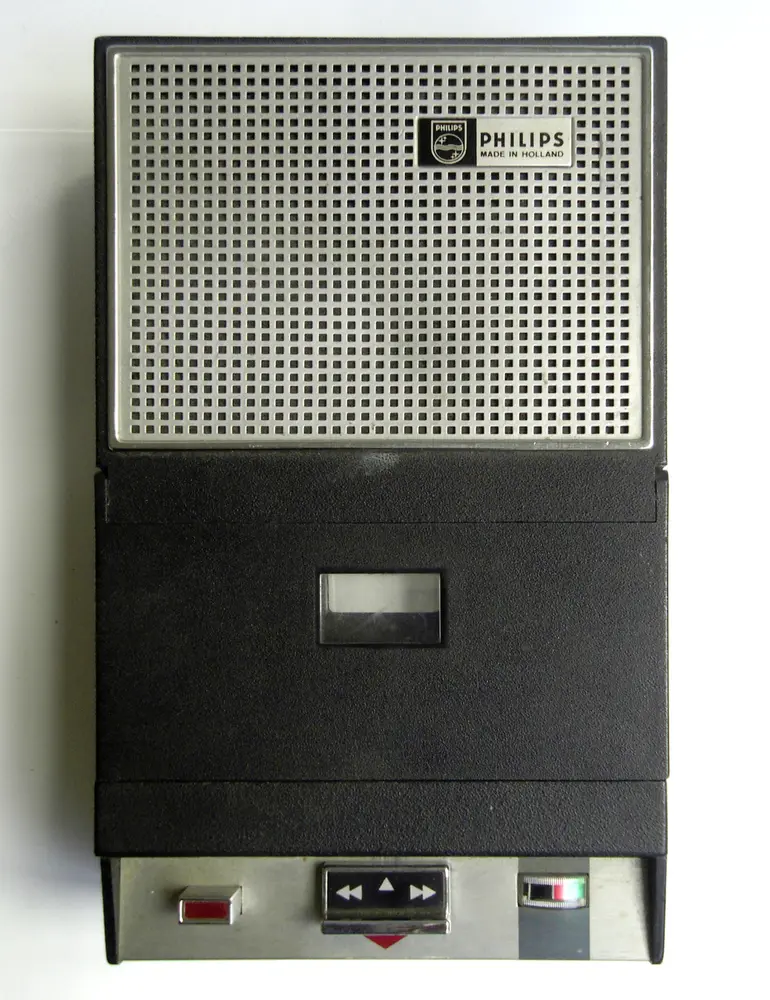
First-generation portable Philips cassette recorder
Philips cassette recorder — Erkaha; edited by Retired electrician · CC BY-SA 4.0 · reduced.

A first-generation Philips cassette recorder from 1963 or shortly afterwards. Users no longer had to thread loose magnetic tape.

Music in a box that fitted in your hand

The cassette was more than a way of listening to music. You could record, copy, keep and share it yourself.

From large reels to a little box

In the 1950s, recording sound usually meant using a reel-to-reel tape recorder. It was large, heavy and not particularly easy to operate. You had to guide the magnetic tape manually around several components. For many households, recording was therefore not yet an everyday activity.

In the early 1960s, a Philips team in Hasselt, Belgium, worked on a much smaller system. Dutch engineer Lou Ottens headed Product Development. According to the Philips Museum, he had a wooden block made that had to fit in his coat pocket. Its size became the starting point for the new recording format.

In August 1963, Philips presented the Pocket Recorder EL 3300 and its Compact Cassette at the Internationale Funkausstellung in Berlin. The plastic case contained two small reels with a narrow magnetic tape between them. Users no longer needed to thread anything. Put the tape in, close the lid and start recording.

Philips allowed other manufacturers to use the system without licence fees, provided they followed its technical standard. A cassette from one brand therefore worked in another brand’s machine. That interchangeability helped the Compact Cassette become a worldwide standard.

Recording with two buttons at once

The first cassette was intended mainly for speech. Sound quality soon became good enough for music. Cassette recorders appeared in living rooms, bedrooms, classrooms and cars. They were often built into a radio or stereo system.

Recording usually meant pressing record and play at the same time. A built-in microphone could capture voices and surrounding sounds. The radio let you build your own music collection. Then you had to turn the tape from side A to side B.

C60

About thirty minutes on side A and thirty on side B.

C90

About forty-five minutes of music per side — enough for many LPs.

Recording meant paying attention. Press too early, and you caught part of the introduction. Press too late, and you missed the beginning. And just when things were going well, the DJ sometimes talked over the first or last bars.

Your own Top 40

For many young people in the Netherlands, recording from the radio was part of the weekend. You waited for a favourite song, watched the buttons and tried to outsmart the presenter. Over time, you built a tape containing only music you had chosen yourself.

That may sound like a cumbersome playlist today, but there was an important difference: a cassette was recorded in real time. A four-minute song also took four minutes to copy. You had to plan the sequence beforehand, and sometimes the end of a side was just too short for the next song.

The cardboard insert was therefore filled in carefully. Artist and title on the lines, sometimes with the playing time. Those who put more effort into a tape drew a cover, used coloured pens or gave each side its own mood.
From recorder to Walkman

A little tape becomes a world standard

  1. Philips presents the Compact Cassette and Pocket Recorder EL 3300 in Berlin.

  2. The first prerecorded music cassettes reach the market.

  3. The first Sony Walkman popularises personal listening on the move.

  4. CDs and digital music begin gradually displacing the cassette.

Music went outdoors

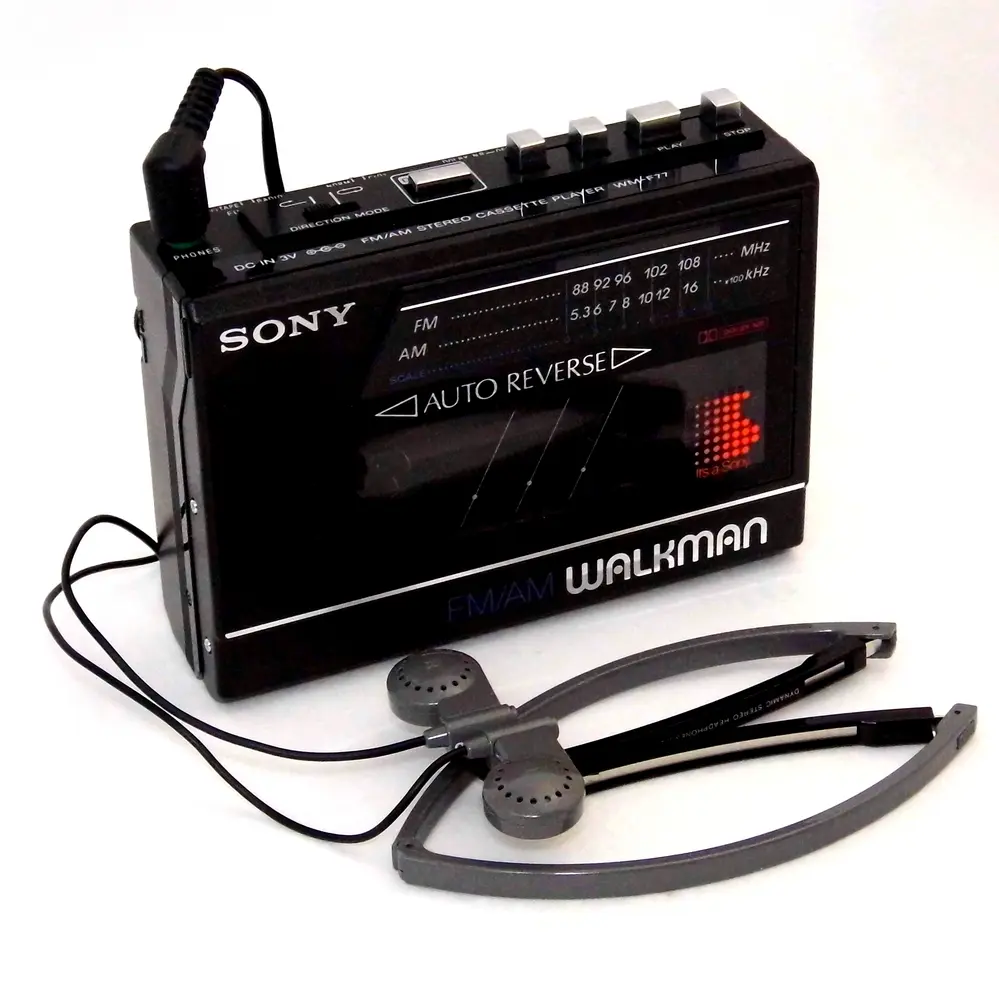
Sony Walkman WM-F77 with its headphones
Sony Walkman WM-F77 — Joe Haupt · CC BY-SA 2.0 · reduced.

This Walkman from around 1986 shows how small a complete stereo player had become.

The mixtape became a personal gift

A homemade tape could say more than a stack of individual songs. The selection and sequence revealed something about both maker and recipient.

More than a playlist

A mixtape for a loved one sounded different from a tape for a car journey or school party. Every song needed its place. Sometimes the last empty minute was filled with a short song; sometimes only a stretch of hiss remained.

Friends exchanged music too. One person’s LP or prerecorded cassette was copied for another. The copy usually sounded slightly less clear than the original, and each further copy added hiss. Yet this ease of copying allowed music to spread beyond record shops. New bands distributed demos, and emerging musical styles found listeners through homemade tapes.

Remember this?

On the cardboard insert, you wrote exactly which tracks were on sides A and B. The handwriting belonged to the tape just as much as the music.

The cassette in the car

A cassette was small enough for the glove compartment, a coat pocket or a bag of holiday things. In the car, you no longer had to accept whatever the radio played. Families took boxes of tapes to the campsite or prepared a long holiday compilation beforehand.

A case got lost under a car seat, a tape spent months in the glove compartment or on the parcel shelf, and labels faded in the sun. Yet many people kept their old car tapes for years. They belonged to a particular journey, a particular summer or a car long since traded in.

The Walkman makes listening private

From 1979, the Sony Walkman made listening even more personal. The first Walkman, the TPS-L2, was a compact stereo player with headphones. It could not record and had no speaker. That initially seemed a limitation, but turned out to be the point: you carried your own music and listened without making others listen too.

This changed the streets as well. Music no longer belonged only to the living room, car or beach radio. It could become a personal soundtrack while walking, cycling or travelling. Smartphones now do this as a matter of course, but the Walkman first demonstrated that desire on a large scale.

Untangling a tape

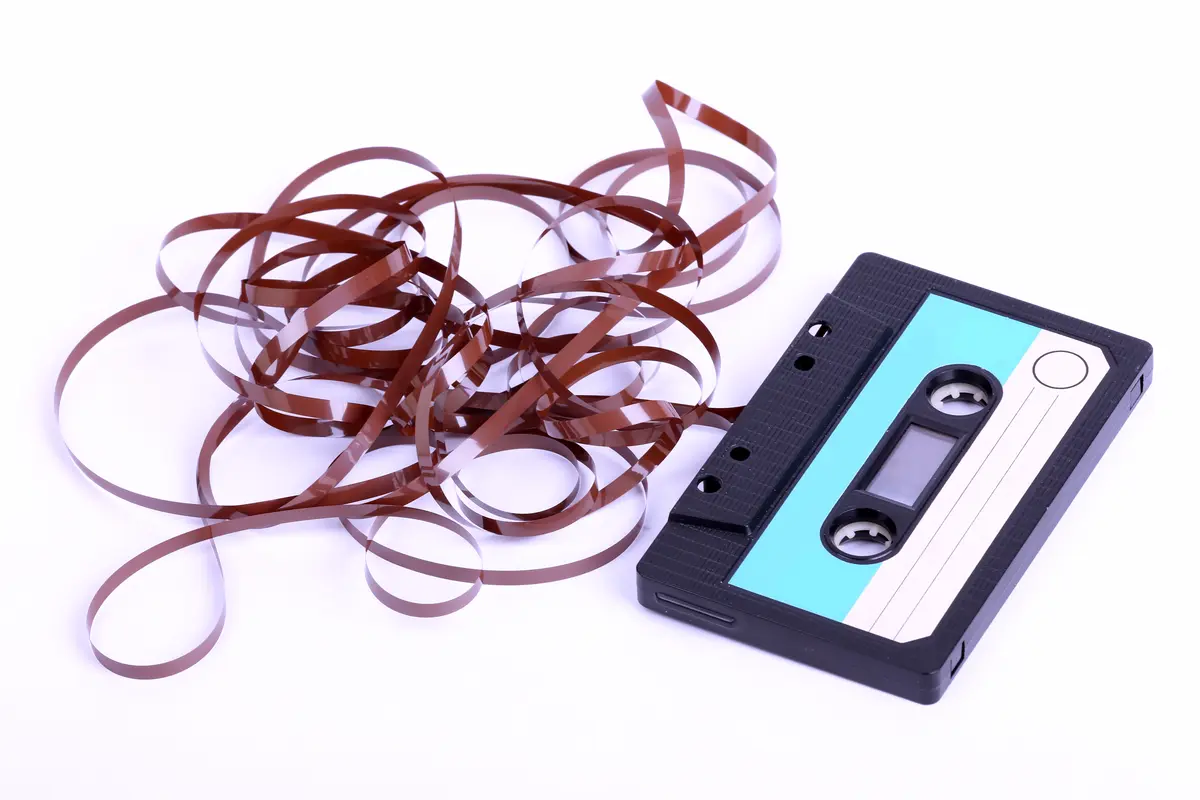
A cassette with a long length of loose magnetic tape
Unwound cassette tape — Tim Reckmann · CC BY 2.0 · cropped and reduced.

A notorious problem: the player pulled the magnetic tape out of the cassette. With patience and a pencil, it could sometimes be rescued.

Fragile, but often repairable

A cassette could wear out, crease or jam. Yet its workings remained understandable and visible.

When the recorder ate the tape

A poorly adjusted player made music sound too fast, too slow or muffled. Batteries ran down, and portable players then slowed the music more and more. Most notorious was the machine that ‘ate’ a tape.

Opening the lid then revealed a long strand of brown-black tape. With patience, you could often wind it back into the cassette. A hexagonal pencil usually fitted neatly into one of the reels. If the tape had broken, a handy owner might try a repair with a small piece of sticky tape.

There was also simple protection against accidental erasure. At the top of the cassette were two small plastic tabs. Breaking off the tab for one side stopped a recorder overwriting that side. Anyone who changed their mind later covered the resulting hole with sticky tape.

More than music

Not every tape held pop music. People recorded radio programmes, family conversations and their children’s first words. There were language courses, audiobooks, church services and spoken letters for distant relatives. Answering machines and dictation recorders used smaller cassette variants.

Some home computers also stored programs on cassette. The sounds were beeps and rattles that the computer could read as data. Loading took minutes and might fail just before the end. Yet an ordinary cassette recorder made computer programs accessible without an expensive disk drive.

Why the tape faded away

From the 1980s, the compact disc offered cleaner sound and direct access to every track. There was no rewinding, and a CD player did not pull metres of tape out of its case. Yet cassettes lasted a long time. Millions of cars had cassette players, and making your own recording was far simpler with a tape than a CD.

Only when recordable CDs, MP3 files and digital players became common did the cassette lose its last major advantages. Copying music was faster, one device held much more, and playlists could change in seconds. Streaming made even owning a recording largely unnecessary.

The tape has not vanished entirely. Some artists release small cassette editions, and enthusiasts use old decks and Walkmans. It is about more than sound quality. A cassette is tangible, has two sides and makes the listener follow a sequence.

What we really miss

It is easy to remember the inconveniences: hiss, waiting and jammed tapes. Yet the nostalgia probably lies elsewhere. A cassette was not unlimited. You had to choose what went on it and spend time doing so.

That made a tape more than a collection of music. It also preserved the moment someone pressed record , the order in which songs mattered and the handwriting of whoever filled in the insert.

Today, almost all music is available immediately. The cassette recalls a time when your music only truly became yours after you had recorded it yourself.

Keep exploring

A blank tape was sixty or ninety minutes of space for your own music.

Explore all stories