At first, television was mostly absent
Switch on a television now, and a picture appears immediately. In the past, you could turn it on and discover there was simply no programme.
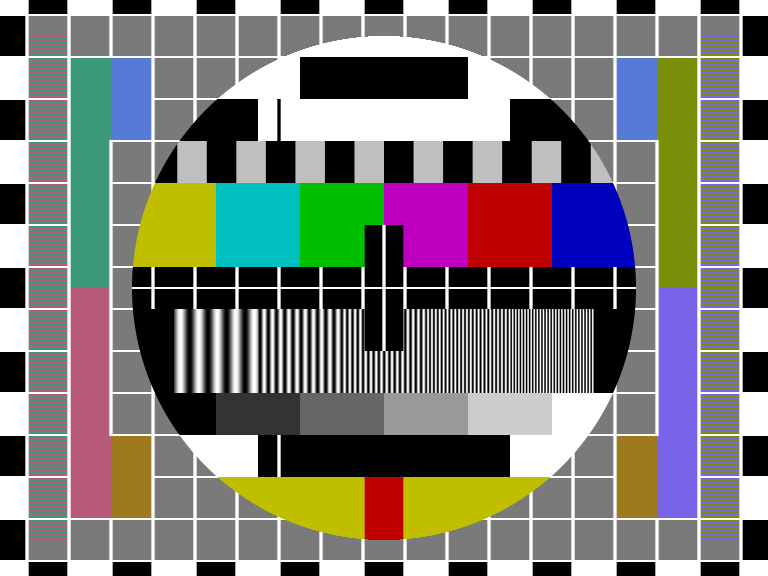
Official Dutch television began on 2 October 1951. There were few sets and an extremely limited schedule. Nothing was broadcast for large parts of the day. Yet a television signal might already be present. Then the test card appeared.
The Netherlands’ most famous still image
A circle, lines, blocks, grey shades and later bright colours: to millions of viewers, it mainly meant broadcasts had not begun. Technically, it was a precise tool. A circle appearing egg-shaped immediately showed incorrect picture geometry, for example.
One of the best-known colour test cards was the Philips PM5544, developed in the late 1960s. Unintentionally, such a technical pattern became one of the most recognisable images of the analogue television age.
Waiting was part of watching
Switching on too early could mean watching the test card for minutes. Sometimes a tone sounded, sometimes music. The picture also carried anticipation: it would start soon. Then came movement, a clock, a broadcaster’s logo or signature tune — and finally a face.