Three digits, an immediate answer

002 & 003

What is the exact time? And what will the weather be like? Before every phone had a clock and a weather app, people in the Netherlands dialled two unforgettable numbers operated by the PTT, the Dutch postal and telephone service.

Listen to the past
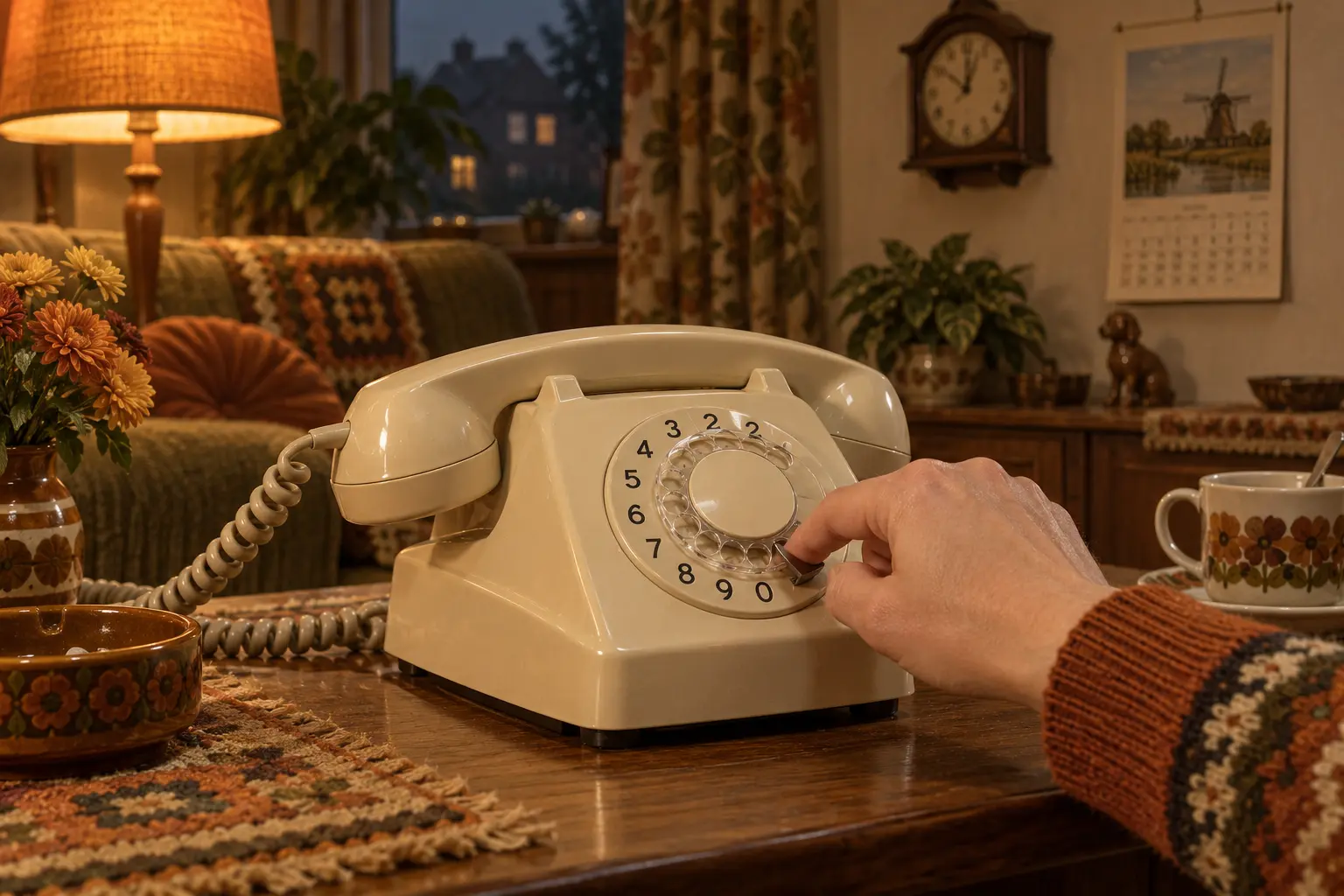
A hand dials a number on a beige rotary telephone in a 1970s living room
Dialling 002 to set the clock. Historical impression created for Vroeger.online.
002the exact time
003the weather forecast

No app, no menu: after three digits, you immediately heard the information you had called for.

002 · the speaking clock

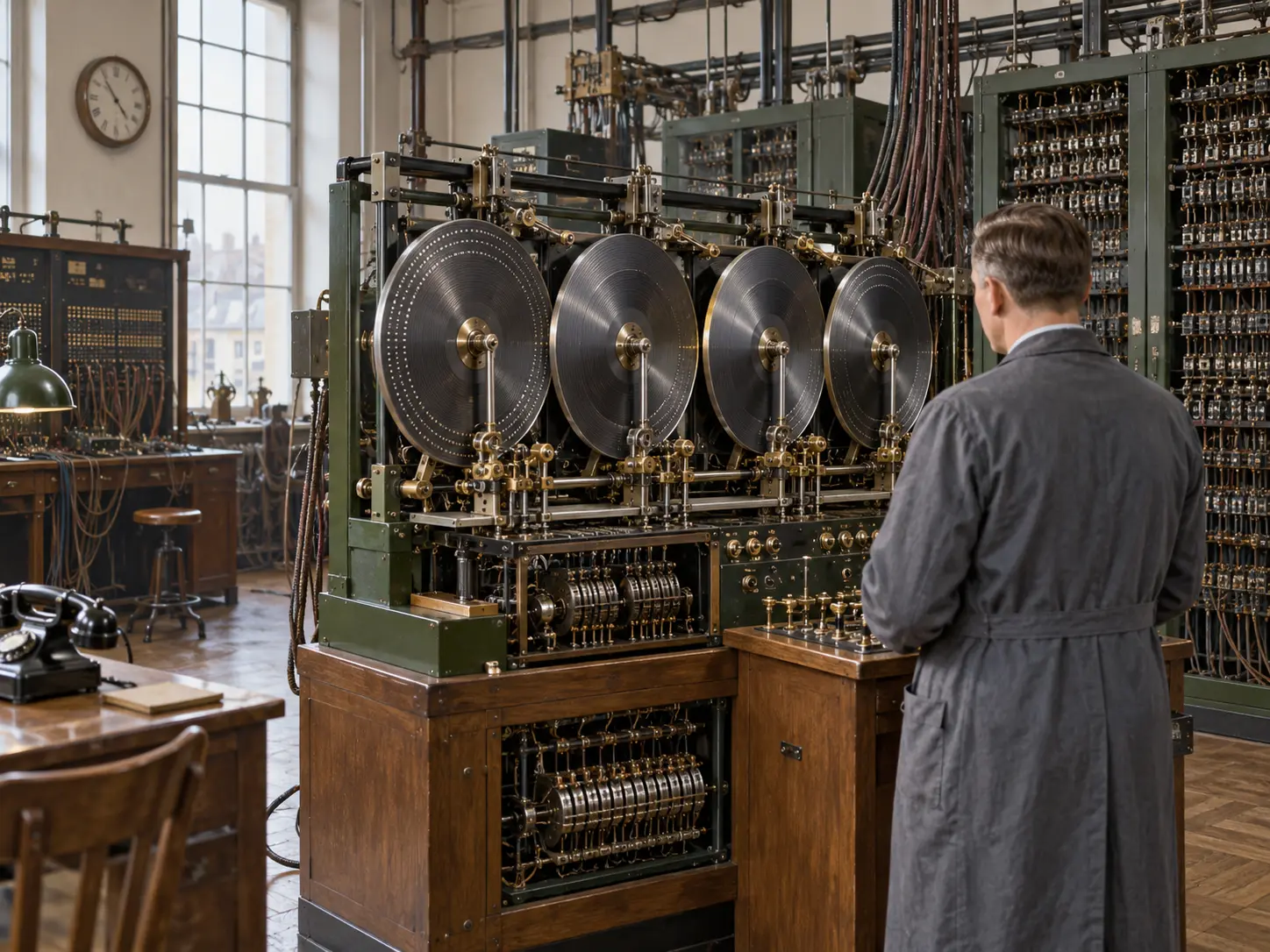
Historical impression of an electromechanical speaking clock with rotating discs in a telephone exchange
The speaking clock ingeniously combined recorded words, discs and telephone equipment. Historical impression.

The voice sounded simple through the receiver, but behind the scenes each word had to play at precisely the right moment.

‘At the next tone, the time will be…’

Dialling 002 did not connect you to an operator. A calm female voice announced the hours, minutes and seconds. A tone then sounded, allowing listeners to set their clocks and watches.

A clock that could talk

The telephone time announcement did not begin as a single national service. In Haarlem, people could already obtain the time by telephone in 1930, initially through a system of tones. The Hague acquired a real speaking clock in 1934. Electrical engineer F.H. Leeuwrik built a device that combined words from rotating strips read optically.

The first voice in The Hague belonged to teacher Cor Hoogendam. This gave the installation its nickname, Auntie Cor. In the following decades, time announcers appeared in more and more telephone districts. Eventually, 002 became the familiar number for the exact time throughout the Netherlands.

Separate words, one flowing sentence

The speaker did not have to record every possible time individually. Hours, minutes and seconds were recorded as separate sound fragments. At the right moment, the machine selected the required words and played them in sequence. A new announcement followed every ten seconds.

“At the next tone, the time will be twelve hours, thirty-four minutes and twenty seconds…”

From 1969, listeners in the Netherlands heard actress and radio drama director Willy Brill. In 1992, digital equipment replaced the mechanical installation, and actress Joke Driessen recorded the new sound fragments.

Tens of millions of calls

002 was much more than a novelty. Clocks were less accurate than they are today, and many people wanted to check their alarm clock. Businesses, broadcasters and people who needed to leave at an exact time also used the service. At its peak, the speaking clock received tens of millions of calls a year.

It was especially busy when the clocks changed for summer or winter time. The telephone was then the easiest way to check whether the clock needed to move forward or back an hour.
003 · the KNMI on the telephone

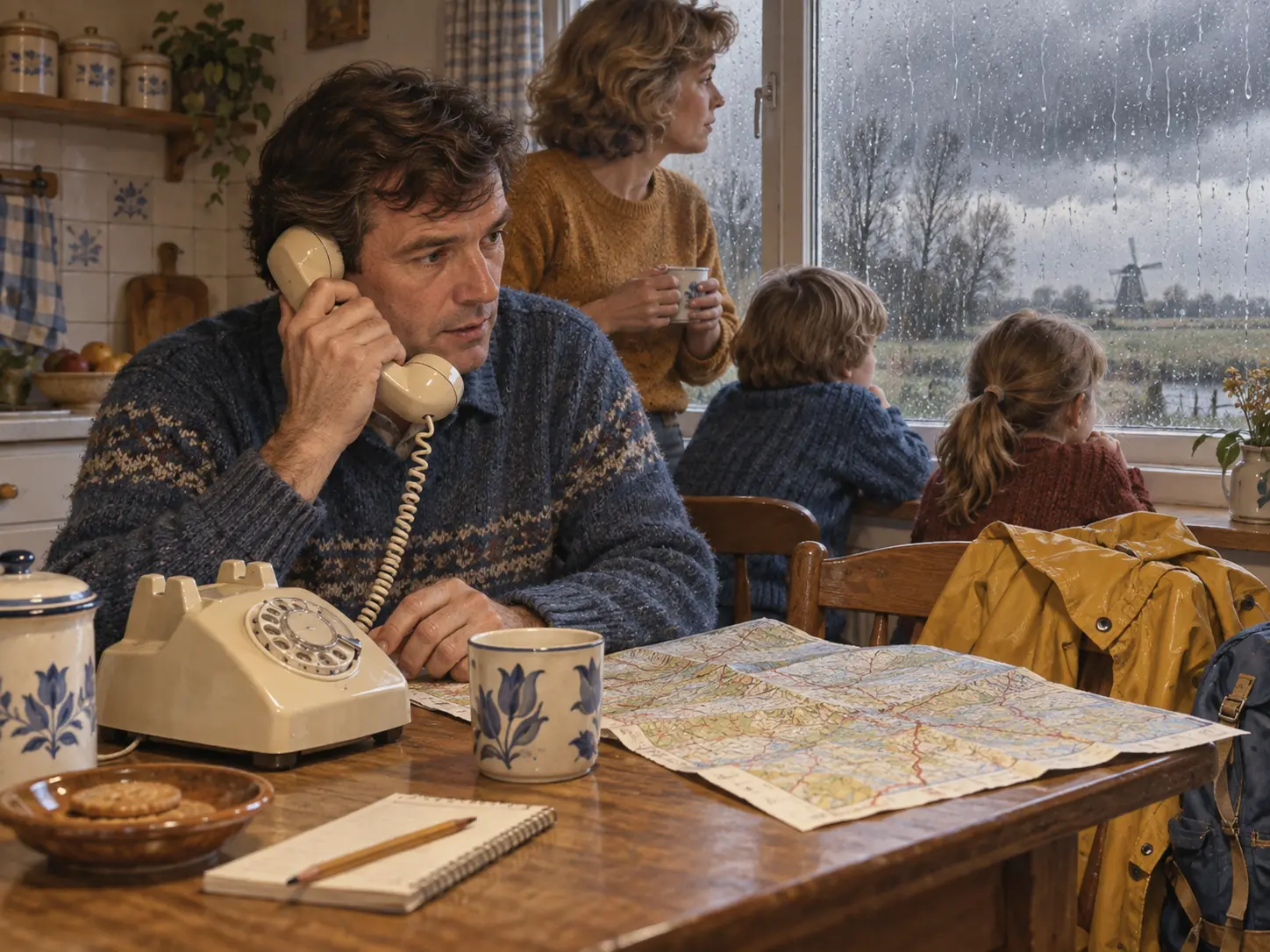
A family in a 1980s kitchen listens to the weather forecast on a rotary telephone while rain falls outside
Before a day out, one call to 003 could settle the decision. Historical impression.

The forecast was general, with no rain radar, but available whenever you needed it.

Will it stay dry? Call 003

Weather forecasts appeared on the radio and in newspapers, but only at fixed times. With 003, you could hear the forecast whenever it suited you.

An automated KNMI forecast

In 1953, the PTT introduced 003 for an automated forecast from the KNMI, the Royal Netherlands Meteorological Institute. Drivers, boat operators, market gardeners and construction firms could quickly hear the latest forecast. Families also called before leaving for the beach, zoo or campsite.

The information was much simpler than what a modern weather app displays. There were no moving rain maps, street-level forecasts or automatic alerts. You heard a general bulletin for the Netherlands and had to adjust your plans yourself.

Why people called 003

  1. 1
    A day out

    Could you take the picnic basket, or would it be an indoor activity after all?

  2. 2
    Working outdoors

    Farmers, builders and market traders wanted to prepare for rain and strong winds.

  3. 3
    On the road or water

    Fog, slippery roads and storms could matter greatly to drivers and boat operators.

From public service to weather hotline

003 remained a household name for decades. The number later grew longer and eventually entered the world of paid 0900 information lines. A commercial weather hotline continued under 0900-8003 for quite some time. Meanwhile, the original, recognisable PTT and KNMI number faded from view.

Teletext, commercial weather channels, the internet, rain radar and smartphones made a paid general forecast increasingly less attractive. The KNMI now distributes forecasts and warnings directly through the internet and an app.

3 December 1990

The numbers had to make way

002→06-8002→0900-8002

003→06-8003→0900-8003

At the time, callers in the Netherlands used 09 for international calls. European agreements made 00 the international access code. Special domestic numbers beginning with 00 could therefore no longer remain. Other services, including 007 for faults and 008 for directory enquiries, also later received longer numbers.

What became of them?

The familiar digits disappeared, but the speaking clock survived remarkably long.

002 became 0900-8002

On 3 December 1990, 002 moved to 06-8002. A later revision of the Dutch numbering plan changed it to 0900-8002. The service continued into the mobile phone era. In 2017, Dutch public broadcaster NOS still reported more than 200,000 calls a year, with peaks when the clocks changed.

003 lost its established place

The weather forecast moved to 06-8003 on the same day and later to 0900-8003. While the speaking clock remained recognisable as a nostalgic niche, the forecast became part of a growing range of weather hotlines and digital services. The old 003 consequently has no clear modern successor as a general public service.

Do you remember…?

…sometimes politely saying “thank you” to the time announcement, even though you knew there was no actual woman at the other end of the line?

Information you deliberately called for

002 and 003 recall a time when information did not constantly demand your attention. You sought it out yourself. Three digits, a rotating dial and a voice in the receiver were enough. No screen, no account and no notification — just a clear answer to one question.

History you can check

Sources & illustrations

More calls & messages

A telephone without buttons made you dial each digit patiently.

Read about the rotary telephone