Pictures & sound

The video
rental shop

Walk past hundreds of cases, hesitate between action and comedy, and discover the newest film was already rented. In the Netherlands, a film night once began in a shop.

Read the story
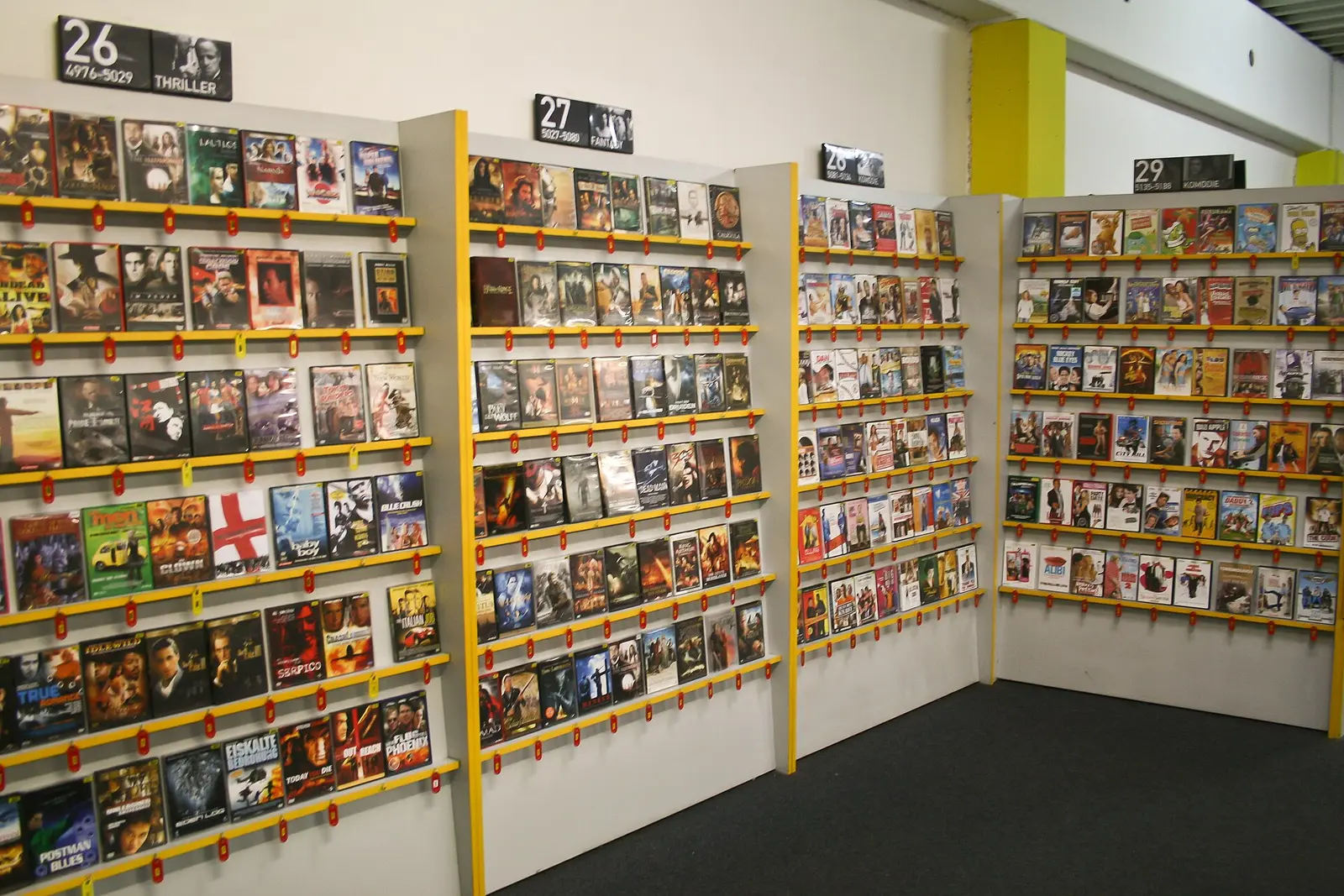
Video rental shop interior with long walls of film cases
Video rental shop in Salzburg — Arne Müseler / arne-mueseler.com / CC BY-SA 3.0 DE · reduced.

First, become a member

Renting usually required a customer card. The shop recorded your name and address so it knew who had taken each expensive tape home.

Suddenly you chose when the film began

The video recorder turned the television into a small home cinema. The rental shop supplied films almost nobody could or wanted to buy themselves.

Before the recorder, television decided

For years, watching a feature film at home meant depending on broadcasters. It began at the time printed in the guide, and a missed broadcast was truly missed. Cinemas offered more choice, but visitors still chose among films currently showing.

The recorder made two new things possible. You could record a television programme for later and play a prerecorded tape whenever you wanted. Philips released its first video recorder in 1971. Different systems then competed for the living room: Sony’s Betamax, JVC’s VHS and the later Video 2000 from Philips and Grundig.

Tapes did not fit competing machines. A household with Video 2000 could do nothing with a VHS tape. Early rental shops often had to buy several versions of the same title or clearly mark each case’s format. VHS eventually won. Even Sony, Betamax’s creator, decided to sell VHS recorders in 1988.

A shop for something you needed one evening

Prerecorded tapes were expensive. Most people wanted to watch a film once rather than keep it for years. Rental perfectly suited the new machine. For a fee, you took a tape home for one or several days.

In the Netherlands, growth was rapid. According to Dutch history magazine Historisch Nieuwsblad , there were around 120 video rental shops in 1981; two years later, around 4,000 were counted. Parts of that early market were disorderly. Illegal copies circulated, picture quality varied greatly, and some shops had grown from sex shops. From the mid-1980s, more polished shops appeared in busy locations. Chains such as Videoland made renting a normal family outing.

120

video rental shops in the Netherlands in 1981, according to Historisch Nieuwsblad.

Around 4,000

shops two years later, in a market still barely regulated.

Your name, address and a card

A videotape represented substantial value. You usually could not simply walk in anonymously and take a film. First, you joined. Staff wrote your details on a form or later entered them into a computer. Sometimes identification or a registration fee was required.

You then received a paper or plastic card with a membership number. Every rental recorded which tape you took and when it was due. An oddly familiar relationship grew: staff knew both which films you liked and whether you always returned them on time.
From new machine to empty shop

Video rental shops grew quickly — and vanished almost as quickly

  1. Philips releases its first video recorder. Home recording and playback draw closer.

  2. The Netherlands has around 120 rental shops; a historical account puts the number at thousands two years later.

  3. The video rental shop is a familiar neighbourhood business. Around 1,100 remain at the decade’s end.

  4. According to NOS, fewer than ten Dutch video rental shops remain.

The cover was the shop window

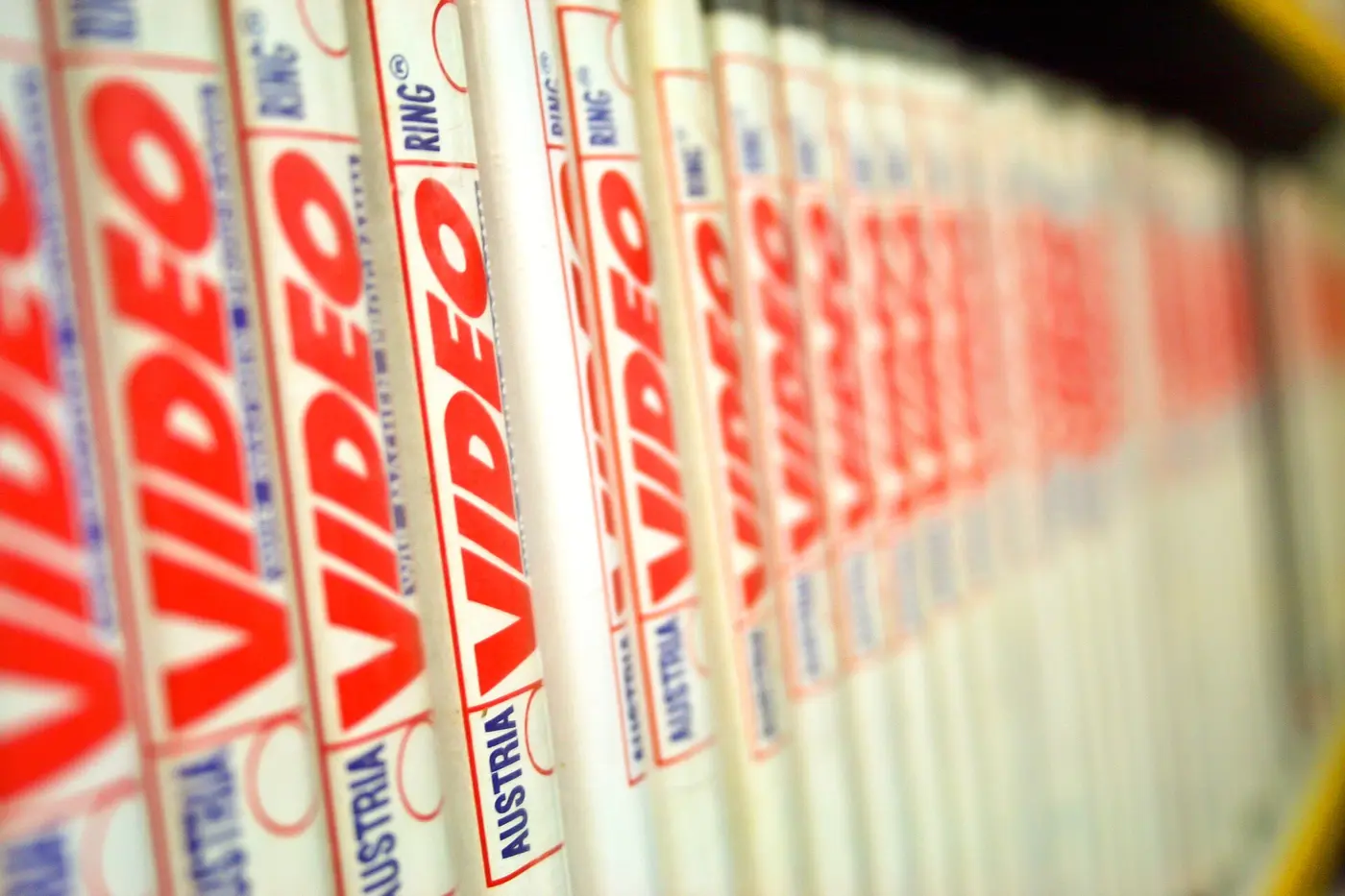
A long row of numbered white rental cases in a video shop
Rental cases — Arne Müseler / arne-mueseler.com / CC BY-SA 3.0 DE · reduced.

The case on the wall was often not the one you took home. The actual cassette stood behind the counter in a sturdy numbered rental box.

Choosing the film was part of the evening

There was no search box or recommendation algorithm. You walked along the walls, read the backs and discussed until everyone agreed.

Past action, thriller, drama and family

The shop was a life-size paper catalogue. Films stood together by genre: action, thriller, horror, comedy, drama, children’s films and often a separate corner for adult titles. New releases took the most prominent spots. Older titles stood further back and were sometimes cheaper.

The cover had to arouse curiosity. On the back were a few pictures, a short summary, leading actors and running time. Without knowing the film, you decided on little information. A spectacular cover could hide a mediocre film; an unremarkable one could hold a surprise.

Busy Friday and Saturday evenings brought a familiar scene. Families, couples and friends slowly made the same rounds. Someone held up two cases. Another vaguely recalled a review. Meanwhile, the most popular new titles disappeared ever faster.

The case was there, the film was gone

A case on the shelf did not always mean an available film. Some shops displayed only empty presentation cases. A card, coloured tab or missing number indicated whether the cassette remained behind the counter. Sometimes you only discovered it from staff: “Sorry, that one is rented out.”

Reserving usually meant telephoning. The shop held the tape until an agreed time. Checking availability online did not yet exist. Late arrivals returned to the walls and often settled for a second or third choice.

Remember this?

The disappointment when that particular new film had gone — and the unexpectedly good older title you took instead.

The staff member as recommendation algorithm

A good shop owner knew both stock and customers. “If you liked this, try that” came from conversations at the counter rather than calculated viewing behaviour. In smaller shops, staff sometimes knew exactly which genre suited a customer.

It worked the other way too. Renting a violent horror film or a title from the screened-off corner was visible. The shop was public in a way streaming is not. Your choice lay on the counter with the next customer just behind.

Film, cola and crisps in one bag

Many shops sold sweets, soft drinks, popcorn and crisps. That was no accidental sideline: they effectively sold a complete evening at home. Some also rented video recorders, and later games consoles and games.

At home, the cassette went into the recorder, often starting with an anti-copying warning. Logos, trailers and sometimes adverts followed. VHS had no menu. You watched from the start or fast-forwarded with a picture until the film began.

Rewind first

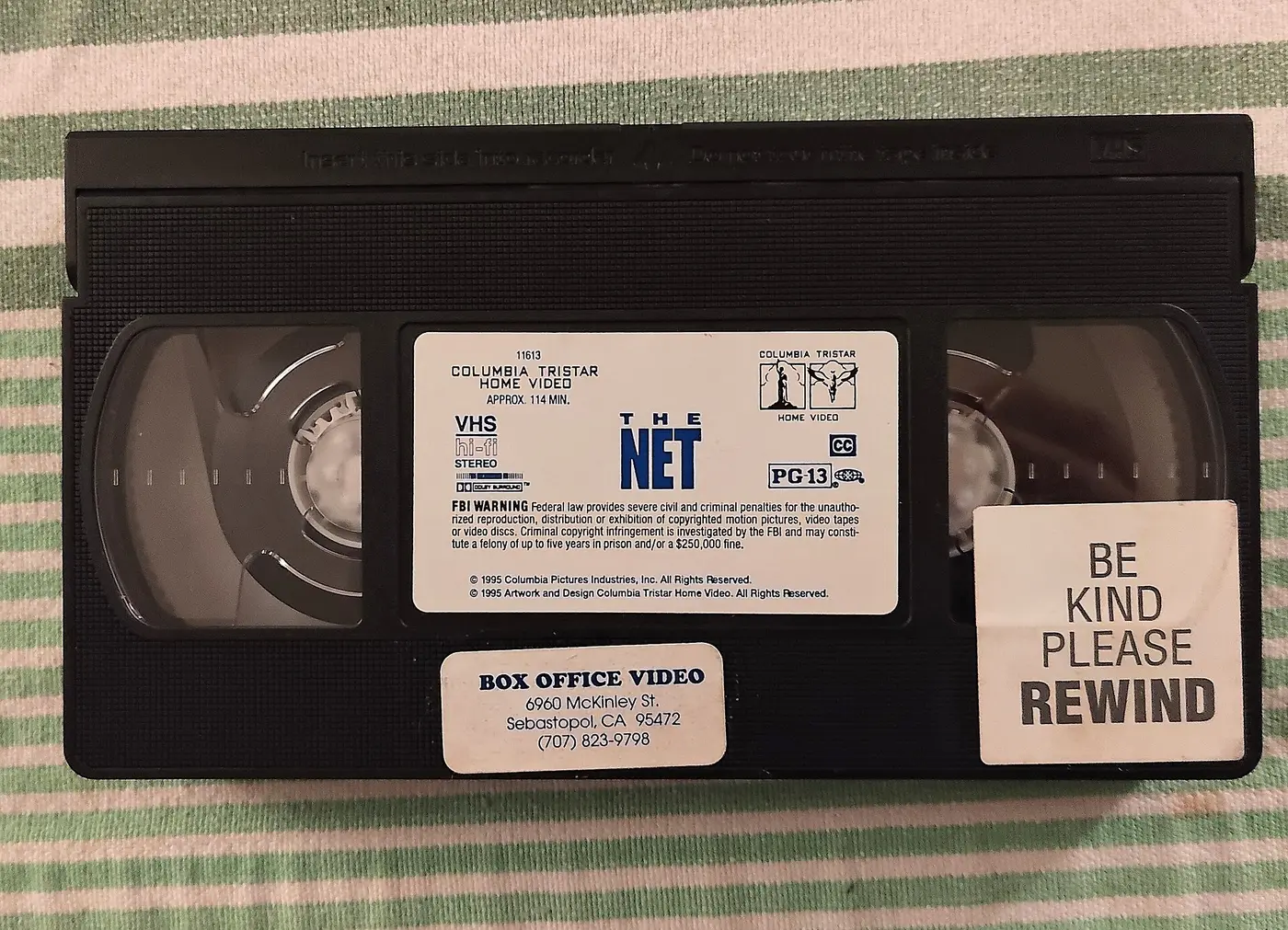
VHS tape with a Be Kind Please Rewind sticker
VHS with ‘Be Kind Please Rewind’ — UnifiedFunctionality / CC BY-SA 4.0 · reduced.

Rewinding was a courtesy to the next renter. Some shops charged if you forgot.

The film was only finished when the tape was back

A rented film did not remain automatically in a digital collection. You had to rewind it, pack it and return it to the shop on time.

‘Be kind, rewind’

After the credits, the tape stood at its end. The next renter naturally wanted the beginning. Rewinding therefore belonged to the ritual. Rental tapes often carried a friendly or forceful reminder sticker. Some shops charged a small fee if staff had to do it.

Rewinding took a few minutes and made a humming sound. Many pressed the button immediately after the film; others remembered just before leaving. Separate rewinders even existed, freeing the recorder for another use and reducing wear.

Late meant paying

The fee covered a fixed period: an evening, a day or a whole weekend. New films often had shorter or more expensive rental periods than old ones. A receipt or box sticker showed the due time.

Late returns meant a fine or another day’s rent. It felt worse knowing someone else might be waiting. Some shops had outside return slots, allowing returns after closing, although the shop sometimes counted them only the next morning.

Damage could cost more. A recorder that creased or ate the tape damaged not just an object but the shop’s only rental copy of that title. Shops checked tapes and could hold the last renter responsible for picture streaks, a broken flap or metres of loose tape.

DVD prolonged the shop’s life

DVD arrived in the late 1990s. The disc was smaller, gave a sharper picture and needed no rewinding. Chapters, subtitles, languages and extras were directly accessible from a menu. Shops gradually replaced VHS walls with slimmer DVD cases.

DVD kept shops appealing for a while. More titles fitted on the same wall, and many customers only gradually acquired new players and collections at home. Games also became more important for some businesses. Yet the fundamental problem remained: each film required two shop visits.

The internet takes the film out of the box

Faster internet connections and illegal downloads came first. Films then became legally available by post, digitally and eventually through streaming. Choice grew, films were immediately available and late fees disappeared. The shop lost the very basis of its business: needing to take a physical copy home temporarily.

According to NOS, the Netherlands still had around 1,100 rental shops in the late 1990s. In 2021, fewer than ten remained. Videoland’s name survived, moving from shop fronts to a streaming service — a striking example of a brand remaining after its original activity disappeared.

What we really miss

Streaming is simpler and offers much more choice. Yet something is missing when film night begins with one click. The shop made choosing a shared activity. You went out, browsed cases, compromised and finally returned with one or two films.

The limits gave the choice weight. If the film disappointed, you often kept watching: no endless catalogue immediately awaited. When the choice was good, it felt as though you had discovered the evening yourself.

The video shop did not rent access to everything. It lent you that one film for an evening — in a box due back the next day.

Keep exploring

A film evening began among the cases — and ended only after the tape was rewound.

Explore all stories