The television evening began on paper

The printed broadcasting guide

Browse, circle and choose together. The broadcasting guide lost its almost universal place in Dutch homes, but did not disappear: it is still sold in shops and delivered to subscribers.

Open the guide
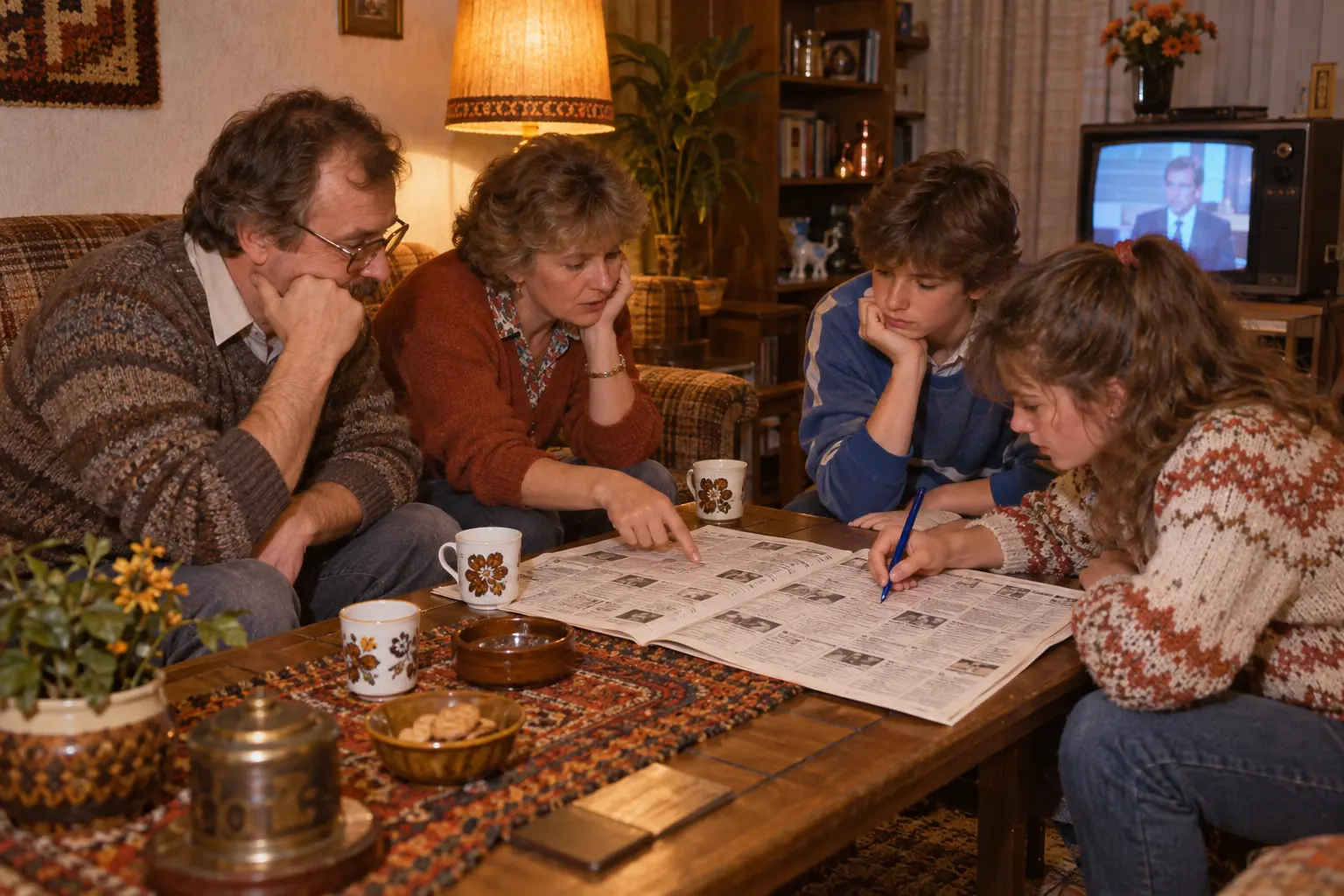
A family discusses the television week with a printed broadcasting guide around 1982
Which programmes had to be seen — and who chose? Historical impression created for Vroeger.online.
1920sthe radio guide emerges
1951television joins the listings
Todaystill on paper

The guide evolved from a broadcasting association’s programme sheet into a weekly magazine helping readers navigate channels, catch-up viewing and streaming.

01 · radio came first

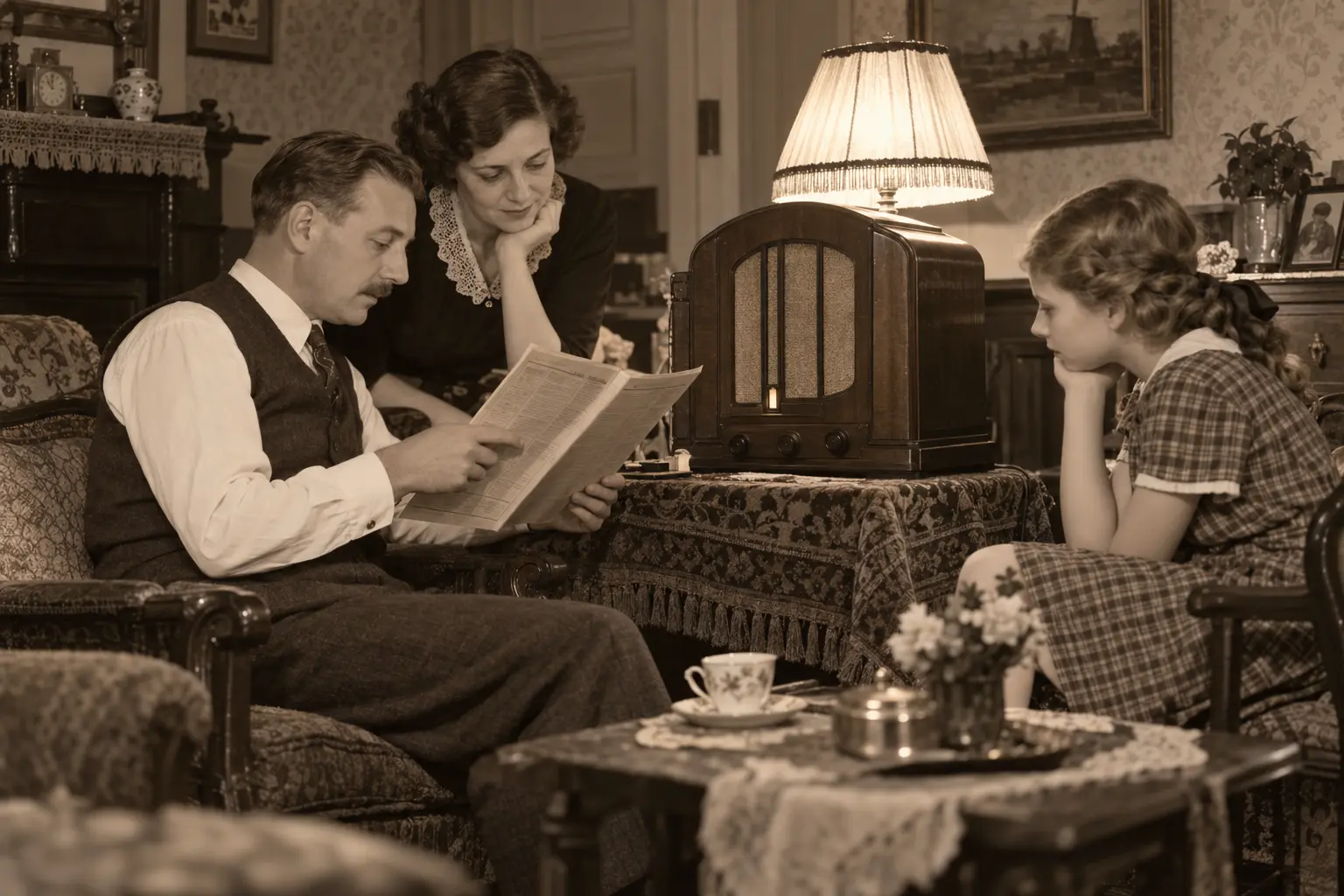
A family follows radio programmes in a printed radio guide around 1932
Listening with the programme listings at hand. Historical impression.

A family’s choice of broadcasting magazine could reflect its religious or political community and outlook.

The guide began beside the radio

The Dutch broadcasting guide did not begin with television. Broadcasting associations wanted to tell listeners when music, speeches, church services, radio dramas and news bulletins would be heard.

A magazine from your own broadcaster

The guide belonged to a society organised into distinct religious and political communities, a Dutch system known as ‘pillarisation’. Catholics, Protestants, socialists, liberal Protestants and more general audiences had their own broadcasters and often their own magazines. These contained not just schedules, but articles, commentary and stories suited to their members.

In 1926, for example, the socialist VARA association published Radio, the predecessor of the later VARAgids. Other broadcasters had magazines with names such as Radiobode, Katholieke Radio Gids and Omroepgids. Subscriptions were often tied to membership of a broadcasting association. The guide thus helped bring members, income and influence to the broadcaster.

Television takes over the columns

When official Dutch television broadcasts began in 1951, broadcasting hours were limited and many households still lacked a set. But television quickly conquered the living room. Radio guides became radio and television guides, with television listings occupying more and more space.

Programme titles, starting times and short descriptions became standard features. Photographs and interviews with announcers, actors, presenters and singers appeared too. With few channels, almost all television programmes fitted neatly onto a few pages.

More than a television timetable

The guide gave programmes a face and brought the broadcaster into its members’ homes throughout the week.
Pen ready

What shall we watch tonight?

A circle for the film, a cross beside the documentary and a large V for a programme to record on video.

02 · planning the week

20:00News

20:27Feature film○

22:10Current affairs

23:05DocumentaryVIDEO

To watch something, you had to be in front of the set on time — or plan ahead.

The guide set the week’s rhythm

The new guide had barely arrived before someone began browsing. A favourite series on Tuesday, children’s television on Wednesday afternoon and a big family show on Saturday evening: television kept fixed hours.

Choosing with a pen

Programmes were underlined, circled or marked with a folded page corner. Family members had their preferences. One wanted football, another a film, while the children hoped to stay up late just this once.

The guide could therefore start a small negotiation. There was usually only one television in the house. Viewing was decided together — or by whoever controlled the buttons.

A missed programme was usually truly missed. There was no catch-up service and no episode you could restart a few minutes later. You could hope for a repeat, but when it might come was uncertain.

The video recorder changes the notes

With the video recorder, interesting programmes acquired the word video, record or simply a large V. The wrong channel, a timer mistake or an over-running football match could spoil the recording.

Systems such as ShowView later aimed to simplify programming. A broadcast had a numerical code you entered into the recorder. For a while, the printed guide became part of the technology itself.

SHOWVIEW2847 193The code replaced a series of manually entered times.

A magazine for the whole week

The guide offered more than listings. Covers attracted attention with famous faces and major broadcasts. Inside were interviews, background stories, reviews, columns, puzzles, recipes and readers’ letters.

Some guides emphasised entertainment; others culture, films, documentaries or their broadcaster’s identity. Editors did not merely say what was coming, but also judged what was worth watching.

03 · ever more choice

More channels meant more columns, smaller lettering and shorter descriptions.

The listings grew fuller

With commercial television arriving in the Netherlands in 1989, and digital television later, an expanding range of programmes had to fit into roughly the same amount of paper.

Smaller lettering, more columns

Major channels received generous columns, while smaller ones settled for compact blocks. Paper remained unforgiving: a schedule change after printing could not be corrected.

The guide moves to the screen

Digital television brought the electronic programme guide, usually called an EPG. Pressing the remote displayed current channel listings. Websites and apps made searching easier still.

Streaming then changed the entire idea of a schedule. A series need not begin at 20:30, and a film need not air on Friday evening. Viewers increasingly make their own timetable.

From scarcity to abundance

Digital services did not solve every problem of choice. Hundreds of channels and endless catalogues sometimes made choosing harder. Where the printed guide once helped with scarcity, it now helps with abundance. Editors select films, series and documentaries that might otherwise disappear among menus.

04 · paper lives on

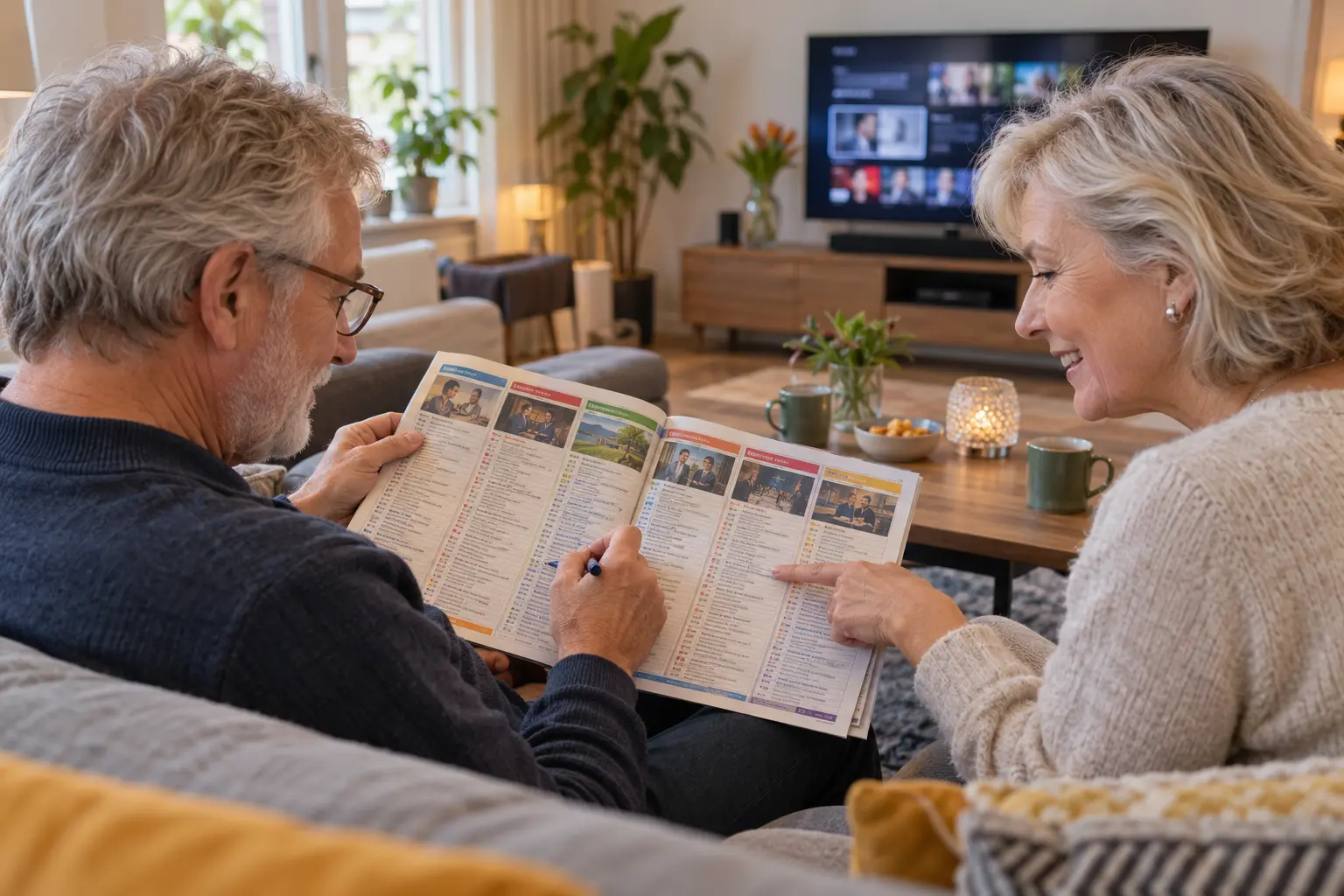
A couple uses a printed television guide beside a modern television today
Paper and digital television menus now coexist. Contemporary impression.

A weekly magazine people still deliberately choose, rather than a museum piece.

The broadcasting guide is not extinct

Titles such as Televizier, Mikro Gids, NCRV-gids, VPRO Gids and MAX Magazine still appear in print. Subscriptions remain available, and television guides are also sold individually.

Paper and digital complement each other

The guides adapted. Streaming services, podcasts and online catch-up viewing found space beside traditional television and radio columns. Some print subscriptions also provide a digital edition or app.

For some readers, paper is simpler too. A guide needs no charging or password and does not hide behind a menu. You can leave it open on the table, mark something and pass it to another person.

An overview without hurry

Paper carries no notifications, and recommendations do not continually move on. Browsing may reveal a programme you would never have searched for. The weekly rhythm remains appealing too: the guide arrives, is read through and stays within reach.

Once, almost every television-watching Dutch household had a programme magazine. Now it is one of many ways to choose. Circulation is lower, and younger viewers more often search on their phones or directly in a streaming service. Buying paper today is often a more deliberate choice.

A survivor on the coffee table

The television evening now often starts with a search screen. But in thousands of homes it still begins with browsing, a pen and the question: what is on tonight?

More television from the past

There were hours when the screen showed nothing but a test card.

Read about the test card and television announcer