A copy before copying became commonplace
Carbon paper suited a few copies. Fifty worksheets, forms or meeting notices needed another solution.
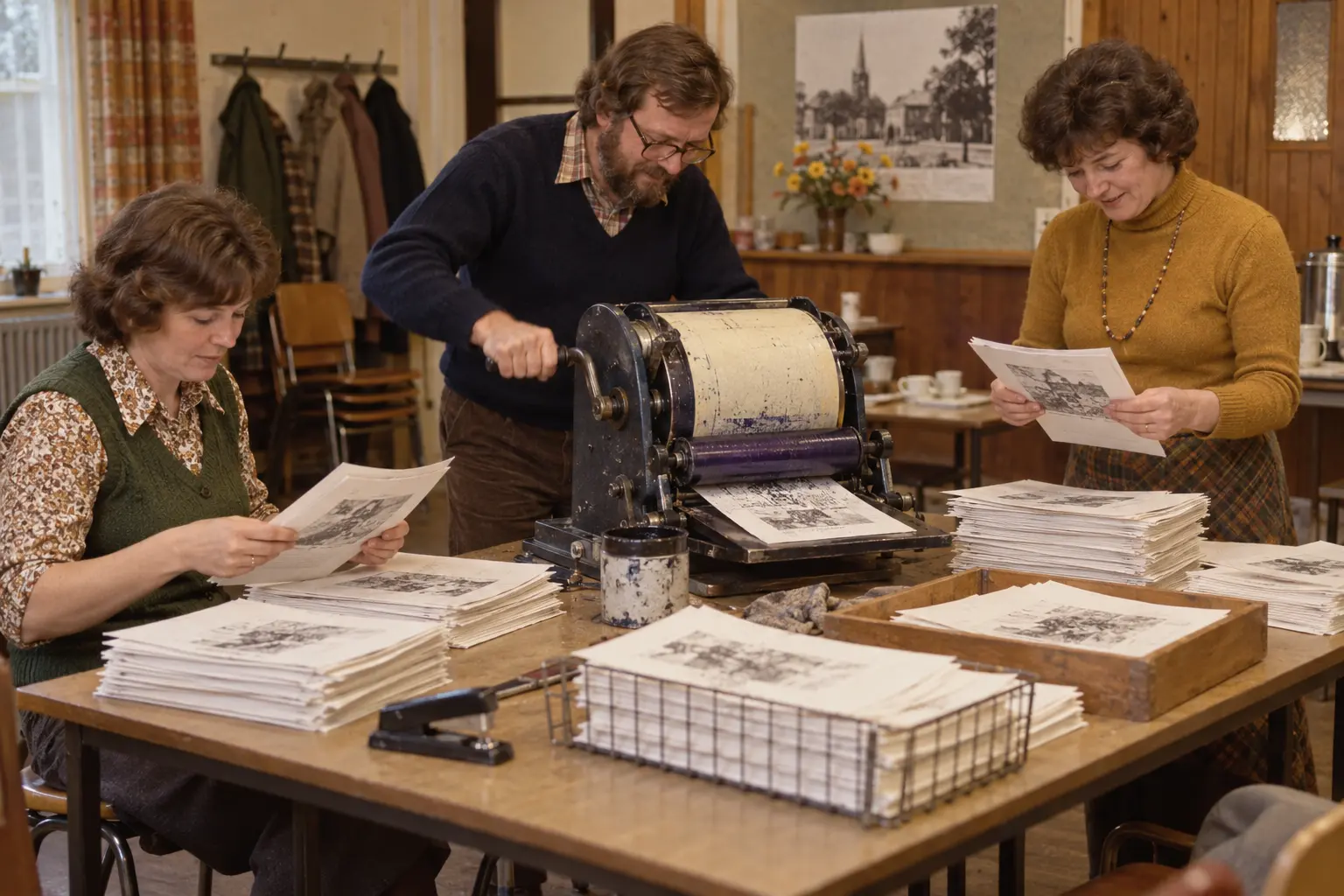
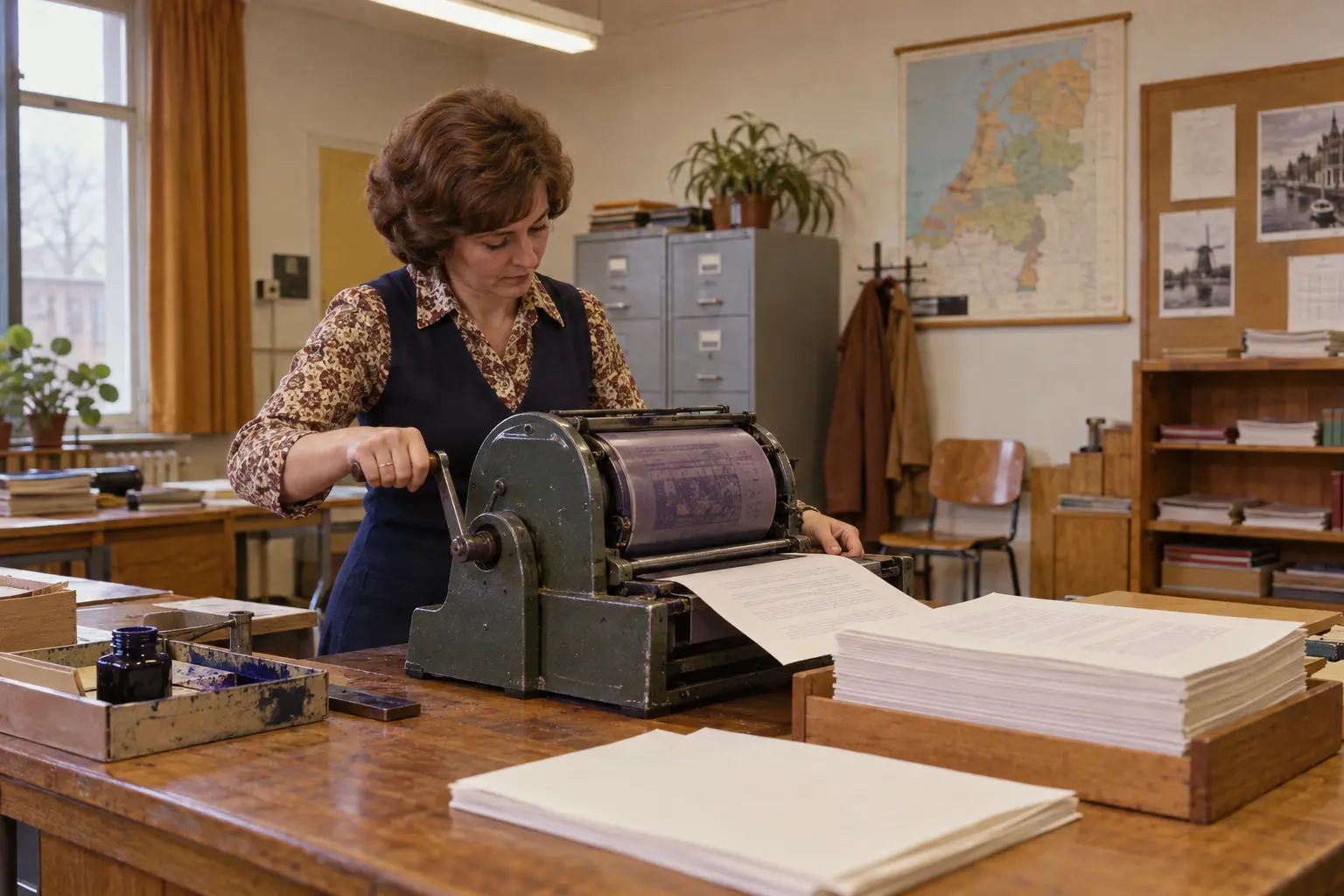
Schools, offices, associations, churches and editorial rooms therefore often had a stencil duplicator. It made small print runs affordable without a printing firm. Quality was modest, but easily sufficient for daily use.
The technology developed in the late nineteenth century. Gestetner’s name became so closely associated with it that people sometimes simply called the machine ‘the Gestetner’. Roneo and Rex Rotary became familiar too. There were small hand-operated machines in cases and larger models on stands or with electric motors.
Typing without an ink ribbon
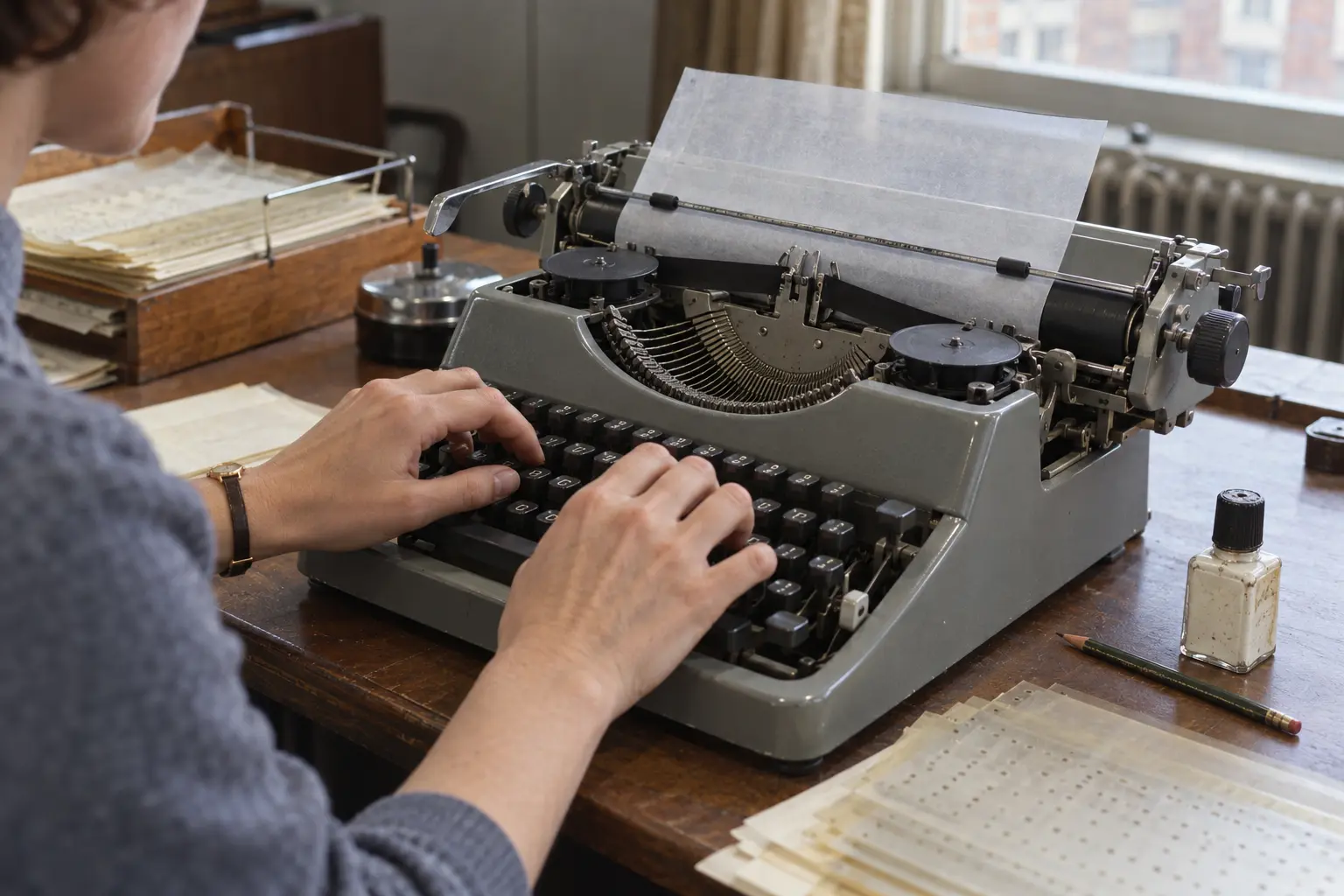
The key component was the stencil: a thin master sheet with a wax-like coating. Text was usually typed onto it. The typewriter ribbon was disengaged. Letters should not appear in ribbon ink; the keystrokes needed to break through the coating.
That required care. Too light a stroke made an unclear letter; too heavy a stroke could damage the fragile sheet. Capitals, underlining and tables needed planning. A special stylus could draw an image into the stencil, although producing an attractive illustration was a skill of its own.
Correction fluid sealed the wrong letter. Only after it dried could the correct letter be typed over it.