Category 03

Getting around

A journey once began with paper. In the Netherlands, you counted fare zones, bought a ticket at the counter and unfolded a map that would never quite fold neatly again.

Explore the seven stories
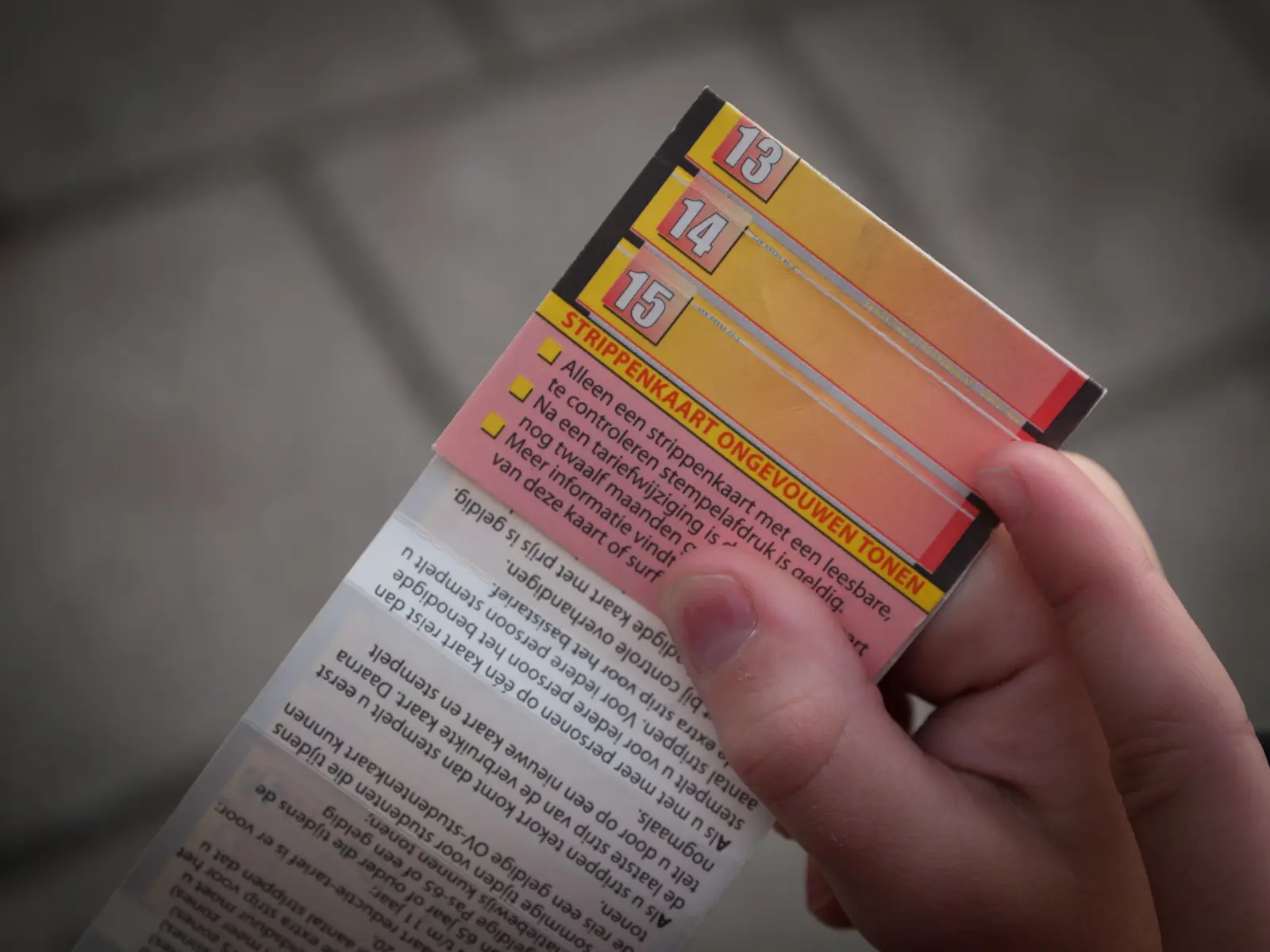
A used red Dutch public transport strip ticket
The strip ticket
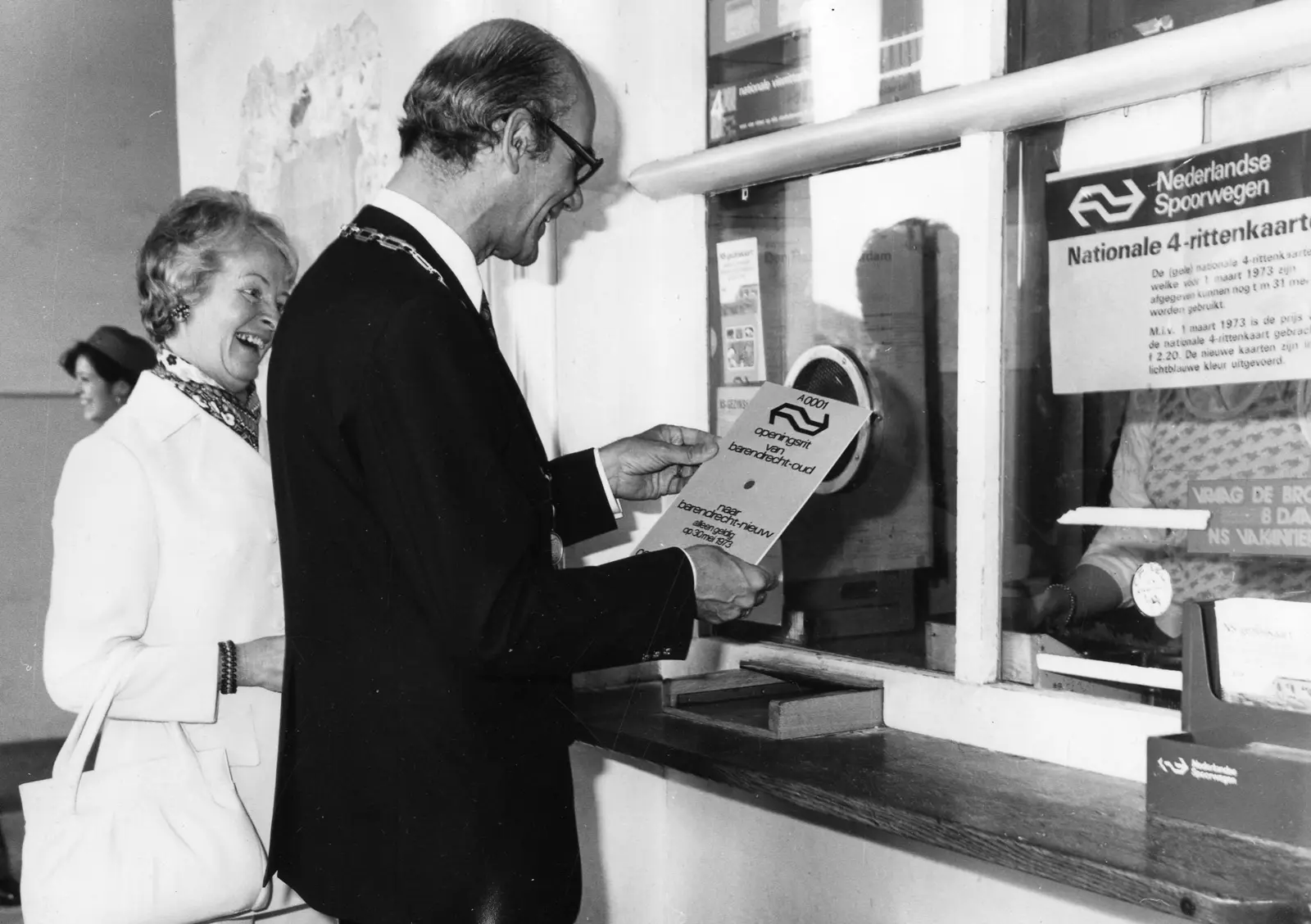
A traveller receives a train ticket at a Dutch Railways counter in 1973
A ticket at the counter, 1973
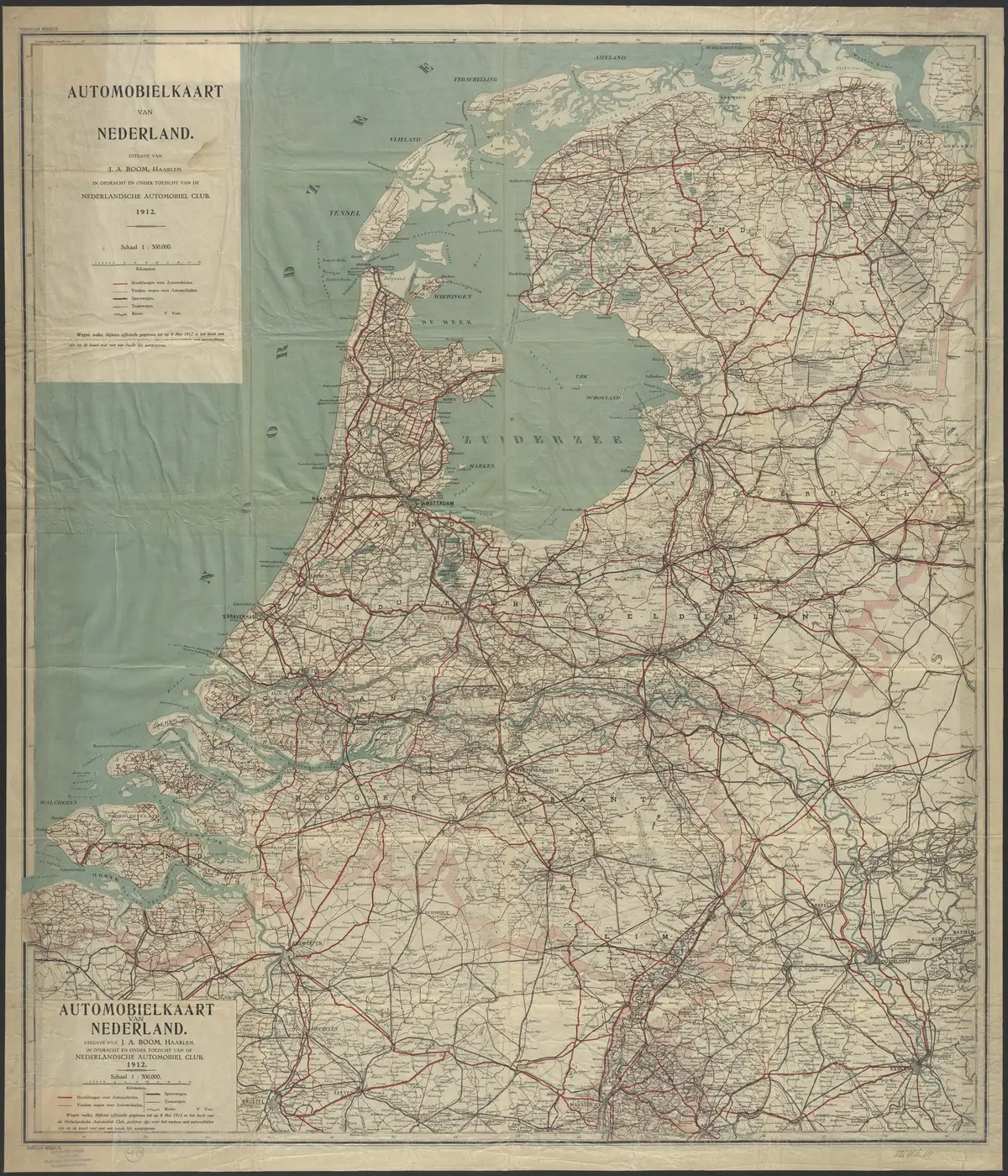
Road map of the Netherlands from 1912
Road map, 1912

From cardboard to contactless

A short timeline

  1. Preprinted cardboard Edmondson railway tickets enter use in the Netherlands.

  2. The national strip ticket simplifies travel with different urban and regional operators.

  3. Dutch Railways retires the classic cardboard Edmondson ticket.

  4. On 3 November, the strip ticket is used for the last time as a nationwide travel ticket.

01 · Bus, tram & metro

A used red national strip ticket showing strips 13, 14 and 15
Photo: Sander van der Wel, Wikimedia Commons, CC BY-SA 2.0.

A strippenkaart covered a number of strips rather than one journey. Its stamp determined where and when your trip began.

The strip ticket

You boarded with a card full of empty boxes. How many were stamped depended on the fare zones crossed by your journey. This Dutch ticket was called a strippenkaart, or strip ticket.

Why there were zones

The Netherlands was divided into public transport fare zones. A trip cost the number of zones plus one basic strip. Travelling through two zones, for example, meant having three strips stamped. The driver, conductor or stamping machine marked the last strip used for that journey.

How it worked

  1. 1
    Determine the route

    A zone map showed how many zones you would pass through.

  2. 2
    Fold the ticket

    You folded the strip ticket so the correct empty strip was on top.

  3. 3
    Have it stamped

    You told the driver or conductor your destination. Where self-service applied, you used the machine.

  4. 4
    Transfer within the time limit

    The time on the stamp determined how long you could continue travelling on that validation.

One ticket for almost all the Netherlands

Before 1980, dozens of operators had their own tickets and fares. The national strip ticket replaced this with a recognisable system for buses, trams and metros. Options included cards with 15 or 45 strips. Reduced-fare cards had a different colour.

Sound familiar?

An almost used-up ticket in your coat pocket. A stamp falling just across two boxes. Or discovering on boarding that only one strip remained.

What replaced it?

The OV-chipkaart, the Dutch public transport smartcard, took over counting and stamping. Checking in and out became the new routine. On 3 November 2011, the strip ticket definitively ceased to be valid nationwide.

02 · On the railway

Mayor Van Hofwegen receives a special train ticket at Barendrecht station’s counter in 1973
Photo: Nederlandse Spoorwegen / Het Utrechts Archief, 1973, CC0.

The letters H and T helped conductors mark the outward or return part of a return ticket.

The cardboard train ticket

The classic train ticket was small, sturdy and preprinted with its departure station, destination and class.

A stock of destinations

Tickets for popular destinations waited behind the counter. The clerk selected the right one, stamped the date and price and passed it through the window. Less common journeys could use a handwritten ticket or, later, one printed by a machine.

30 × 57 mm

Approximately the size of the familiar Edmondson ticket.

1857

The year this system was introduced in the Netherlands.

Here came the ticket punch

On the train, the conductor checked your ticket. A punch made a hole, or later a date stamp marked it. On return tickets, the punch position could show whether the outward or return journey had been used. Different punches made different shapes, identifying the inspection.

A ticket was also administration

The cardboard tickets had monetary value. Stations had to manage stocks carefully and account for sales. The system was reliable but needed much space: tickets had to be ready for many destinations and fare types.

What replaced it?

In 1982, classic Edmondson tickets disappeared from Dutch Railways. Computers then printed larger paper tickets. Ticket machines, the OV-chipkaart, electronic tickets and bank-card travel followed.

03 · By car

Unfolded 1912 road map of the Netherlands, with roads marked in red
Road map of the Netherlands, J.A. Boom, 1912. Collection of Utrecht University Library.

The map often lay open on the passenger’s lap — and soon occupied half the front seat.

The paper road map

You studied the route beforehand, followed it with a finger on the map and sometimes summarised it on a scrap of paper.

From place name to road number

First you found the departure point and destination in the index. A grid reference beside each place name located it on the map. Then you followed coloured lines from main road to motorway, noting junctions, exits and place names that should appear on signs along the way.

How you stayed on course

  1. 1
    Plan the route beforehand

    You chose a route using road types, distances and places along the way.

  2. 2
    Prepare the correct side of the map

    The map was folded to show only the area around the route.

  3. 3
    Compare road signs

    On the way, you checked that the expected place name or road number appeared.

  4. 4
    Stop if uncertain

    A car park, petrol station or passer-by offered help when the route no longer made sense.

No traffic-jam warnings

A road map knew nothing of a closed exit, new roundabout or current traffic jam. Traffic news came from the car radio. Missing a turn meant finding your own alternative, after first discovering where you actually were.

Not entirely gone

Paper maps are still sold and used. They provide an overview, need no battery and work without a signal.

What replaced it?

Dedicated satellite navigation devices became common in the 2000s. Smartphones then took over, with spoken directions, live traffic information and routes that recalculate themselves.

Read the full story: maps & street atlases →

04 · At the back of the bus

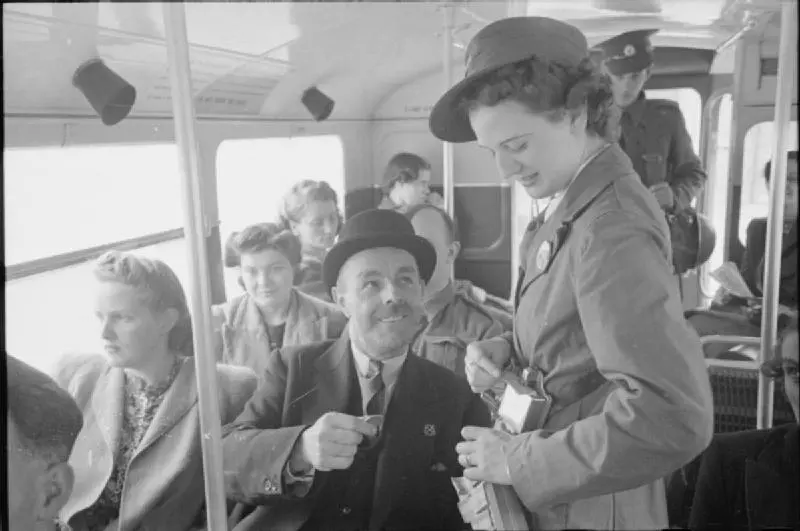
Bus conductor Rita Anderson sells a ticket to a passenger on a London bus in 1941
A female bus conductor sells a ticket, London 1941. Photo: British Ministry of Information / Imperial War Museums, public domain.

On some city buses, passengers boarded at the rear, where the conductor had a fixed seat and cash drawer.

The bus conductor

The driver drove. The conductor sold tickets, helped passengers and watched until everyone had boarded.

Two people on one bus

Not every bus had a conductor, and practices differed by city and operator. Where there was one, they often sat or stood near the rear entrance. Passengers named their destination, paid cash and received a ticket from a booklet, roll or ticket machine.

More than selling tickets

The conductor knew the route and could explain where to change. They also supervised the vehicle. Once everyone was inside and the doors could safely close, the driver received a departure signal — a bell, for example.

Money bag

For coins and change.

Tickets

For different journeys and fares.

Punch

To punch or mark a ticket.

Why the conductor disappeared

Operators gradually changed to one-person operation. Drivers also began selling and checking tickets. Buses were redesigned accordingly: passengers now boarded at the front, past the driver. The change happened at different times, from the 1950s into the 1970s in various Dutch cities.

Is the conductor really gone?

On ordinary scheduled buses, yes. On trams, the role returned in some cities for service, supervision and checking tickets. The old bus conductor with a money bag and ticket rack, however, belongs to the streets of the past.

Keep exploring

From travelling to coming home.

Explore all categories